

What Is Lager Beer? Complete Guide for India by Drifters
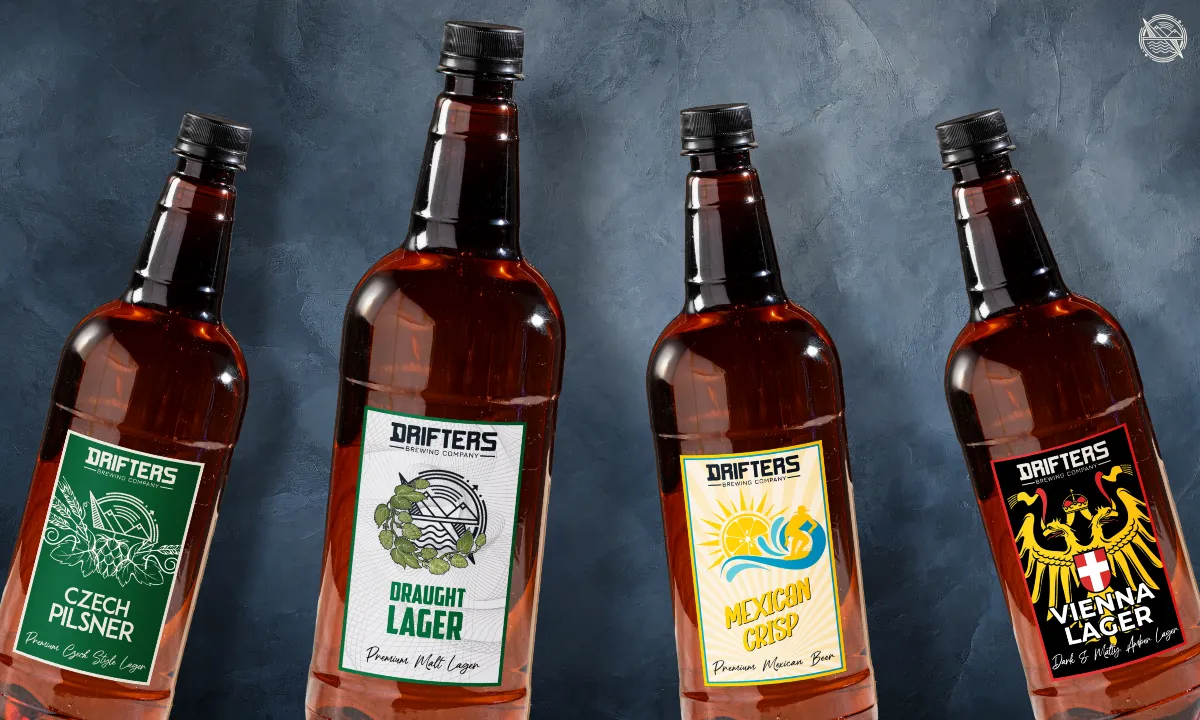
What is lager beer really, beyond a frosted mug and a crisp first sip. If you have ever wondered why some beers feel clean and easy while others feel fruity and bold, you are already asking the lager question.
This guide breaks down what lager is, why it took over the world, how it differs from ale and how Drifters’ own lagers fit into that story for Indian drinkers.
What is lager beer?
In simple terms, lager is beer fermented cold with a special bottom-fermenting yeast, then stored cool for extra time so it becomes clean, smooth and crisp.
Technically, most lagers use a yeast called Saccharomyces pastorianus, a hybrid that came from ale yeast (Saccharomyces cerevisiae) and a cold tolerant wild yeast called Saccharomyces eubayanus. This hybrid emerged in Central Europe around the 17th century and became the backbone of modern lager brewing.
Unlike ale yeast, which works warm near the top of the tank, lager yeast ferments at cooler temperatures and settles toward the bottom. That slow, cool fermentation produces fewer fruity esters and spicy phenols, which is why lagers taste cleaner and more neutral than many ales.
The word “lager” itself comes from the German lagern, meaning “to store”, a reference to the way early brewers kept these beers in cool caves or cellars for weeks or months until they were ready.
Meet the people behind the pours at Drifters.
How lager is different from ale
For drinkers who just want a good pint, the easiest way to understand lager is by comparing it with ale.
Yeast and temperature
- Lager uses bottom fermenting yeast, like Saccharomyces pastorianus, which prefers cool temperatures, typically around 4 to 13 °C in the fermentation and storage phases.
- Ale uses top fermenting yeast, Saccharomyces cerevisiae, which works warmer and produces more aromatic compounds.
Flavour and feel
- Lagers tend to be described as crisp, clean and refreshing, with malt and subtle hops doing most of the talking.
- Ales often lean more fruity, spicy or complex, depending on the style.
In a hot, humid state like Maharashtra, that lager profile fits naturally with how people eat and drink. It is no surprise that Drifters has built a strong lager side to its tap list, from clean Draught Lager to characterful options like Mexican Crisp, German style lagers and a Vienna lager such as Mozart’s Magic.
A quick history of how lager took over
For most of brewing history, humans only brewed warm, ale like beers. Cold fermentation arrived by accident and observation.
Brewers in Bavaria began storing beer in alpine caves and cool cellars to keep it stable. Over time, a new yeast hybrid appeared that actually thrived in those cool conditions. Modern research connects this to the arrival of Saccharomyces eubayanus from South America, probably during the era of the Columbian Exchange, when plants, microbes and people were moved between continents.
That hybrid became Saccharomyces pastorianus, the true lager yeast. Once brewers realised how stable, clear and refreshing these beers were, the style spread across Central Europe and later the world.
Today, when someone pictures “beer” in a generic sense, a pale lager is often what their brain shows them.
See what Drifters is pouring, brewing and dreaming up today.
Types of lager, the Drifters way
There are many classic lager families, but you do not need to memorise them all. It is more useful to understand a few key directions and where Drifters sits in that map.
Pale and Helles style lagers
These are light coloured, easy drinking and built for refreshment. A German style helles focuses on soft malt sweetness and gentle bitterness rather than aggressive hops.
Drifters’ Draught Lager and its German lager variants live in this space. They are the beers you order when you want something simple, clean and repeatable with almost any food.
Pilsner style lagers
Pilsners are pale lagers with a firmer hop presence and a snappier bitterness, originally from the Czech city of Plzeň.
Drifters channels this idea with Czech inspired pilsner offerings like Charles the Pils, which give you that sharp, bright edge without losing drinkability.
Vienna and amber lagers
Vienna lagers and related styles like Märzen bring amber colour and toasty, biscuity malt flavours while staying smooth. They are perfect when you want more flavour but still want a crisp finish.
Drifters’ Mozart’s Magic (Vienna Lager) is a textbook example, offering malty warmth that still works in Indian evenings.
Modern twists: Mexican Crisp and friends
New world lagers often use corn or rice to lighten the body and make beers even more crushable. Drifters’ Mexican Crisp takes that route, using corn to add subtle sweetness and a rounded mouthfeel while keeping the lager core intact.
It is the kind of beer that proves lager does not have to be boring to be easy drinking.
How to serve lager the right way in India
Lager is often served ice cold, but “freezer glass and numb taste buds” is not ideal if you care about flavour.
Beer serving guides suggest:
- Light bodied lagers and pilsners show best around 4 to 7 °C
- Amber or stronger lagers can move up toward 7 to 10 °C, where malt aromas open up a bit more
In practical terms for Indian drinkers:
- Straight from a regular beer fridge is close enough for pale lagers like Draught Lager or Mexican Crisp.
- For Vienna style or more malty lagers, let the glass sit a couple of minutes so the beer is not painfully cold.
Glassware helps, but do not overthink it. Tall, tapered glasses show off clarity and bubbles. A sturdy mug suits Vienna and Oktoberfest style lagers, especially when the plan involves clinking and photos.
The real non negotiable rule is simple: clean glass, good pour, visible foam head. A proper head not only looks good, it traps aroma and softens the first sip.
Ready to taste the difference for yourself? Grab your Drifters beers here.
How to choose the right lager for your mood
Once you understand what lager is, choosing becomes easier:
- Want something light for the heat?
Go for clean options like Draught Lager or Mexican Crisp. Pair with fried snacks, pizza or anything you would normally order with a “regular beer”. - Want more flavour but still crisp?
Look for Vienna style lagers like Mozart’s Magic. They bring toast and caramel without heaviness, great with richer mains and grills. - Want a sharper edge?
Try a pilsner style lager like Charles the Pils, especially with salty, fatty or cheesy food.
Under all of these, the definition stays the same. Lager is beer made with cold loving, bottom fermenting yeast, stored cool until it becomes clear, stable and refreshingly precise.
Once you taste your way through a few Drifters lagers with that in mind, “what is lager beer” stops being a theory and becomes a very real, very crisp answer in the glass.
FAQs
Q1. What is lager beer in simple words?
Lager is beer fermented cold with bottom-fermenting yeast, then stored cool so it becomes clean, smooth and crisp.
Q2. How is lager different from ale?
Lagers use cold, bottom-fermenting yeast and taste cleaner, while ales use warm, top-fermenting yeast and often taste fruitier or spicier.
Q3. Are all lagers light and pale?
No. Many are pale and easy drinking, but styles like Vienna lagers and dunkel lagers are darker and maltier while still finishing crisp.
Q4. What temperature should I drink lager at?
Most lagers taste best chilled, roughly 4–7 °C for light lagers and 7–10 °C for fuller, amber styles.
Q5. Which Drifters styles are lagers?
Drifters brews several lagers, including clean Draught Lager, corn-led Mexican Crisp, Czech-inspired pilsners and Vienna style lagers like Mozart’s Magic.