

How Is Craft Beer Made: A Maharashtra Brewer’s Perspective
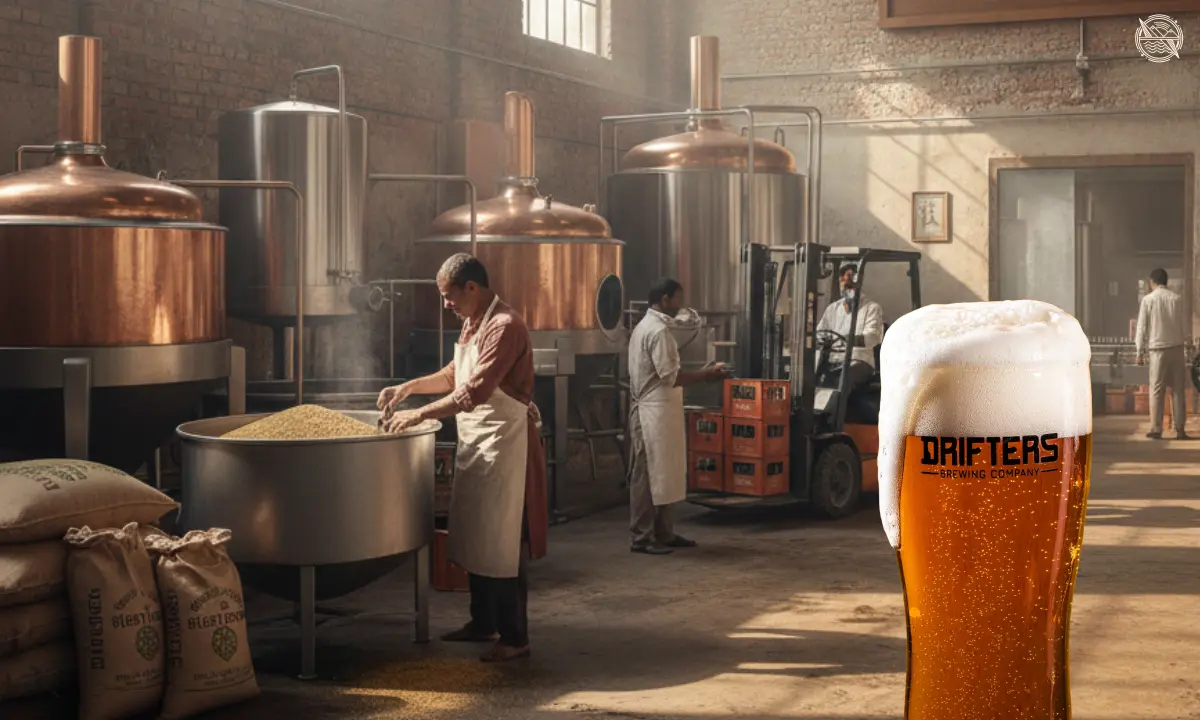
How Is Craft Beer Made in Maharashtra is a question that sounds simple until you ask a brewer who lives inside the noise of pumps, steam and stainless steel every single day. From outside, it looks like shiny tanks and cold pints. From inside, it feels like a mix of science and controlled chaos that you only really understand when you taste the final glass.
Here is how a Maharashtra brewer sees it, without giving the whole magic trick away.
A brewer’s first question is never “how” but “why”
Before anyone touches a single grain, the real story of how craft beer is made begins with intent. What should this beer feel like in Mumbai heat or during a Pune winter evening? Should it cut through spice, wrap around smoky flavours, or sit easy beside a long conversation?
A Maharashtra brewer thinks in flavours, weather and people, not just in litres and numbers. The mash tun, the kettles, the fermenters are just tools. The real starting point is a picture in the brewer’s head of the beer in your hand.
The recipe lives in notebooks, memory and instinct, but the exact balance of malts, hops, water profile and yeast remains locked inside the brewery. The only way to know if they got it right is to drink the result.
Meet the people behind the pours at Drifters.
Grain, water and a very local point of view
On paper, craft beer is simple. Water, malted grain, hops and yeast. Yet “how is craft beer made in Maharashtra” is shaped heavily by where that water comes from, which malts make sense for the climate and what local drinkers actually enjoy.
Grain gives beer its backbone. It decides colour, body and a big part of flavour. A brewer here might lean on lighter malts for a clean lager that survives coastal humidity, or richer malts for a beer built for cooler winter nights in the state. Water chemistry is tuned quietly in the background so that the beer feels smooth instead of harsh, refreshing instead of flat.
From the outside, you just see sacks of malt and pipes carrying water. The real decisions, the little adjustments that make a beer feel “right here, right now”, never show up on the tour. They only show up in that first sip.
Heat, monsoon and the hidden fight for balance
Brewing in Maharashtra is not like brewing in a cold European cellar. Here, heat and humidity are always waiting at the door. Tanks need to be chilled, timings tweaked, equipment pushed to keep the beer in a tight temperature window while the outside world does its own thing.
A few degrees too high and flavours change. Fermentation races. Aromas shift. So the brewery becomes a constant dance of turning valves, checking readings and outsmarting the weather without you ever noticing.
From the bar, all you see is a perfectly poured pint. You never see the late-night corrections, the extra checks, the sigh of relief when the batch hits the exact balance the brewer was chasing. That part of how craft beer is made stays invisible, unless you are tasting for it.
Start your Drifters craft beer journey!
Hops, steam and deliberate chaos
If malt is the body, hops are the spark. They can add bitterness, bright aroma, tropical fruit, pine, spice or flowers, depending on when and how they are used. In the brewhouse, this is where things look dramatic. Steam rising, kettles roaring, hops going in at precise moments.
A Maharashtra brewer has to think about how those hop flavours will feel in Indian food culture. Too bitter and it clashes with spice. Too soft and the beer feels forgettable. The timing of each hop addition is a quiet calculation that decides whether the beer slaps you awake or invites you back for another round.
You will never see the scribbled timings, the trial batches or the batches that did not quite make the cut. All you get is the version that survived that chaos and made it to your table.
Yeast and the part of the process you never see
Ask any brewer and they will tell you: humans do the preparation, yeast does the real work. Once the cooled, hopped wort meets yeast, everything shifts behind closed steel doors.
This is where sugars become alcohol and carbonation. It is also where hundreds of subtle flavour compounds appear, depending on temperature, time and yeast strain. For a Maharashtra brewer, keeping fermentation steady while the outside climate swings is a full-time mind game.
You cannot watch this happen. You do not see the gravity readings, the tasting samples drawn from the tank, the decision to give a beer one more day because it is “almost there”. You only meet the beer after the yeast has done its job and the brewer has decided it is ready to meet you.
Shop fresh Drifters craft beer straight from the source.
A Maharashtra brewer’s fingerprint
So how is craft beer made differently in Maharashtra compared to colder countries? The ingredients are similar, but the rules of the game change.
You have:
- Higher ambient temperatures
- Monsoon humidity and salt in the air
- Food that refuses to be subtle
- Drinkers who want flavour but also drinkability
A brewer here has to think about how a beer stays stable from tank to tap, how it tastes next to a plate of kebabs or coastal seafood, how it feels after the third sip on a humid night. That shapes the choice of styles, the level of bitterness, the body of the beer and even how cold it is served.
On the surface, you see familiar names on the tap list. Lager, ale, stout, saison. Underneath, those styles have been nudged, tuned and adapted to live in Maharashtra. You will not find that recipe in any global textbook. You will find it in the glass.
The secret that never leaves the brewery
In the end, “How Is Craft Beer Made: A Maharashtra Brewer’s Perspective” is only half a story you can tell in words. The tanks, hoses and shiny steel can be photographed. The broad process can be explained. But the small decisions that separate an average beer from a Drifters beer are not written on any wall.
Those live in:
- The exact temperature the brewer refuses to compromise on
- The moment they decide to stop the boil
- The day they say “now” and move a beer from tank to tap
A magician never reveals every trick. A good brewer does not either. You can stand in the brewhouse, listen to the pumps and stare at the tanks and still not know what truly makes a particular beer feel like it could only have been brewed here.
The only way to find out where the story really ends is simple. You have to drink it.